

Tzviki Barkai was struck by a sniper's bullet during Operation Cast Lead, and for years concealed the nightmares and anxiety that haunted him afterward. Einat Tasarfati, who treated him through aquatic therapy, taught him how to cope. After October 7, when his symptoms worsened, he joined her in treating soldiers suffering from trauma similar to his own.
פורסם:
By Mor Pikielny
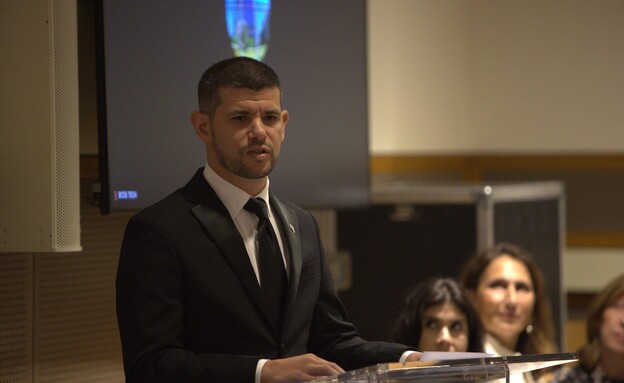
"I always wanted to be a combat soldier. There was never the slightest doubt in my mind that I'd serve in a combat unit," recalls Tzviki Barkai, who was wounded by sniper fire during Operation Cast Lead and has lived with post-traumatic stress ever since. Last week, Barkai came full circle after nearly two decades when he stood before the United Nations General Assembly to share his story. He opened his speech with the words: "I was reborn on January 5, 2009" – the day he was wounded.
Just before taking the stage, Barkai, 38, married and the father of two daughters, spoke with N12 about his life and the growth that emerged from the darkest moment he had ever experienced. "I enlisted in the Paratroopers Brigade, completed combat medic training – overall, it was a pretty standard military path," he says.
Everything changed in late 2008, when Operation Cast Lead began. "It wasn't easy, but I felt an enormous sense of purpose. I truly believed I was protecting my people and my family, both directly and indirectly."
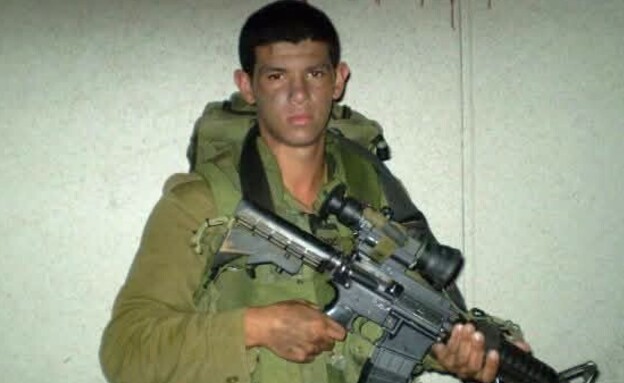
As part of the operation, Barkai and his battalion entered Gaza on foot, spending several days inside abandoned buildings. "At one point we were in a structure that had an exposed section facing open ground," he recalls. "Two tanks were positioned ahead of us and were supposed to provide cover whenever we needed it."
פרסומת
"Whenever we left the building, there were a few seconds when we had no choice but to expose ourselves. I remember sprinting as fast as I could, and just before reaching cover, it felt like a hammer slammed into the back of my head. There wasn't a single doubt in my mind—it was a bullet. I was convinced it had gone straight into my head."
He vividly remembers what came next. "I went from standing upright to smashing face-first into the ground. I was certain I was dead, absolutely certain. I believed there was no surviving something like that. It felt as though the bullet had entered my skull. It's exactly like they describe in the movies—complete silence, followed by an unbearable ringing in your ears. There's a strange sense of acceptance in that moment – a mixture of overwhelming fear and the realization that your eyes are about to close forever."
"I Realized I Was Still Alive and Shouted: 'I've Been Shot!'"
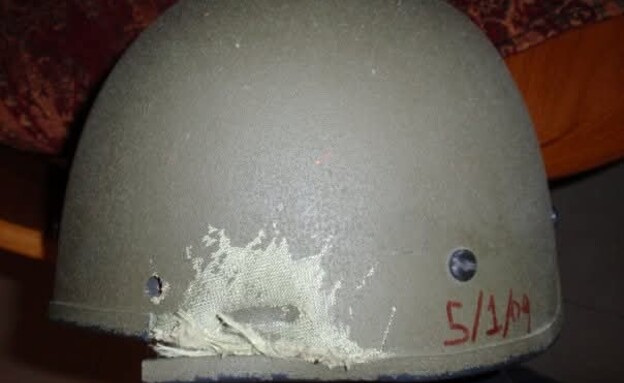
A few seconds later, Barkai realized he had survived. The bullet had missed his head by just a single millimeter, grazing his scalp instead. "The bullet literally pierced my helmet," he explains. "Looking back, I probably also suffered a concussion, which explains the ringing in my ears. No one around me realized what had happened. There was so much battlefield noise. Then, after those incredibly significant few seconds, I realized I was still alive—and I shouted, 'I've been shot!'"
פרסומת
At the hospital, doctors explained just how narrowly he had escaped death. "They told me, 'You experienced a miracle. It's only a concussion. Your story ended well.' But that day I had no idea how to process what had happened. I even wanted to go straight back to my unit. I didn't feel like fear was controlling me. Today I understand that, in reality, my story was only beginning."
Looking back, Barkai says the physical wound was insignificant compared to the psychological toll it took. "My physical injury was momentary – almost trivial. It was those few moments when I came face to face with death that changed my life forever."
פרסומת
"I was living in a kind of denial, and my condition only got worse over the years," he says. "I couldn't sleep. I suffered from nightmares, panic attacks, and bursts of anger. It took me three or four years before I was even willing to admit to myself that I had PTSD."
Years later, he finally understood why it had taken him so long. "Seventeen years ago there simply wasn't the awareness of post-traumatic stress that exists today. And above all – I was ashamed. There were friends of mine who were wounded far more severely than I was. I kept thinking, 'Who am I to complain about nightmares or panic attacks?' At the same time, I desperately wanted to preserve the image of being the strong one—and I think that's what ultimately broke me."
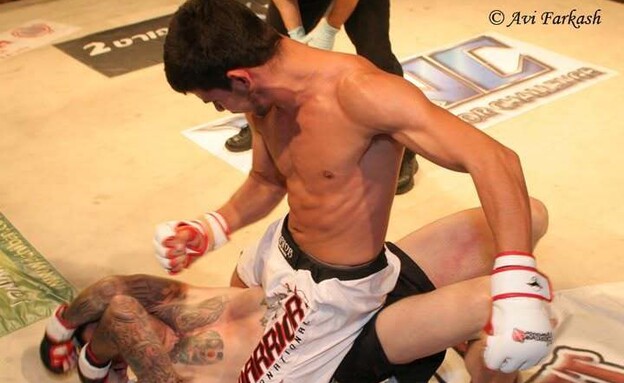
Having practiced martial arts since childhood, Barkai found himself living a double life. "I lied to myself," he admits. "On the outside, I was 'the strong Tzviki'—an MMA fighter, a successful businessman, always smiling. But inside, I was shattered. I couldn't sleep at night. Every little noise made me jump." In his younger years, Barkai was considered one of Israel's most promising mixed martial arts fighters.
פרסומת
That double life continued until a moment that came thousands of miles from home, during the post-army backpacking trip through South America that so many young Israelis take. "I heard a shotgun blast in the distance," he recalls. I wasn't in any danger, but my body simply collapsed. It took me right back. My heart started racing, and I felt as though the ground was swallowing me. I was traveling alone, and I remember barely speaking for almost a week. There was no one there to pick me up. I had chills all day, nightmares, and no motivation to get out of bed. That's when I suddenly realized something: the war may have ended—but it had never left me."
"For the First Time, I Stopped Running From My Story"
When he returned to Israel at age 24, Barkai realized he needed professional help. "I went to a psychologist and started therapy without telling anyone—not even my parents." Looking back, however, he describes those sessions as "a Band-Aid." "It was very general therapy. We never went very deep. I still wasn't truly processing what had happened."
פרסומת
He notes that none of the professionals he met even spoke about post-traumatic stress. "Right after I was wounded, I also had one meeting with the military mental health officer. It was a very superficial conversation. I think I slipped through the cracks. I was denying what had happened, and no one really knew. Unfortunately, that's still the reality for many soldiers and civilians in Israel today."
The real turning point came when Barkai was 27, when he met the woman who would ultimately become both his therapist and his partner in a shared mission Einat Tasarfati. "She began treating me through aquatic therapy. Einat never tried to erase my memories or tell me that everything was okay. She simply took me into the water," he says.
פרסומת
"There, when someone holds you like a small child, wraps you in complete safety and security, everything around you goes quiet. The water created a safe space where, for the first time in my life, I stopped running from my own story. It was terrifying—but also extraordinary."
According to Barkai, "There's something about water—it doesn't let you hide. It shuts out all the background noise. Until that treatment, I don't think I had ever allowed myself to truly revisit what happened. I refused to replay the moment I was wounded. I refused to let myself surface."
He says the first sessions were by far the hardest. "During that first treatment, I began processing the experience for the first time. I remembered things from that day that I hadn't recalled at all. It was frightening and incredibly difficult, but for the first time I didn't run away from the pain. I looked it straight in the eye. And every time I returned to the water, I came back a little stronger."
פרסומת
Around his twentieth treatment, something changed. "For the first time, the event became a memory. It was no longer something I relived every time it crossed my mind." From that point on, his panic attacks became significantly less frequent, and his life gradually began to stabilize.
"October 7 Started an Entirely Different Story"
In 2015, Tasarfati founded the Einot Bar Center in the community of Gvaot Bar in Israel's northern Negev. "The center was the realization of a dream that took nearly seven years to build, together with the Bnei Shimon Regional Council, which supported us throughout the process," she says.
פרסומת
"Over the past decade, it has become a therapeutic center serving not only residents of the region but people from across the country, while also earning international recognition. We grew by providing therapeutic services for a wide range of people—from infants to the elderly—and at the same time became one of Israel's pioneers in the field of wellness."
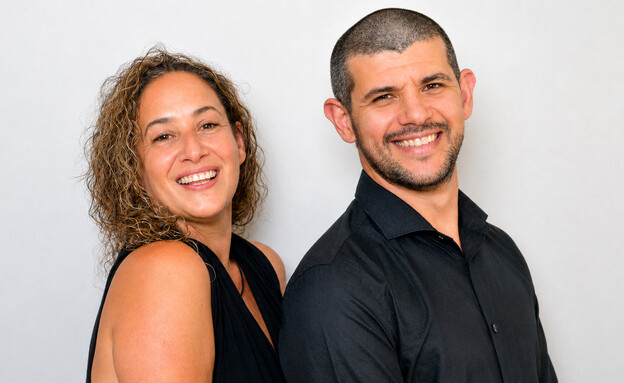
The Hamas-led October 7 massacre transformed the center overnight—and dramatically changed Barkai's own condition as well. "October 7 marked the beginning of a completely different chapter for us," Tasarfati says.
פרסומת
"Within the first few hours, survivors from the communities surrounding Gaza began arriving. As the fighting intensified, people streamed in. Overnight, the center became a field hospital for psychological trauma. Our entire staff worked around the clock, 24 hours a day, entirely on a volunteer basis."
"By February 2024, more than 10,000 trauma survivors had already passed through our doors." Although Barkai had reached a far healthier place in his life before the war, the events of October 7 triggered a severe setback.
פרסומת
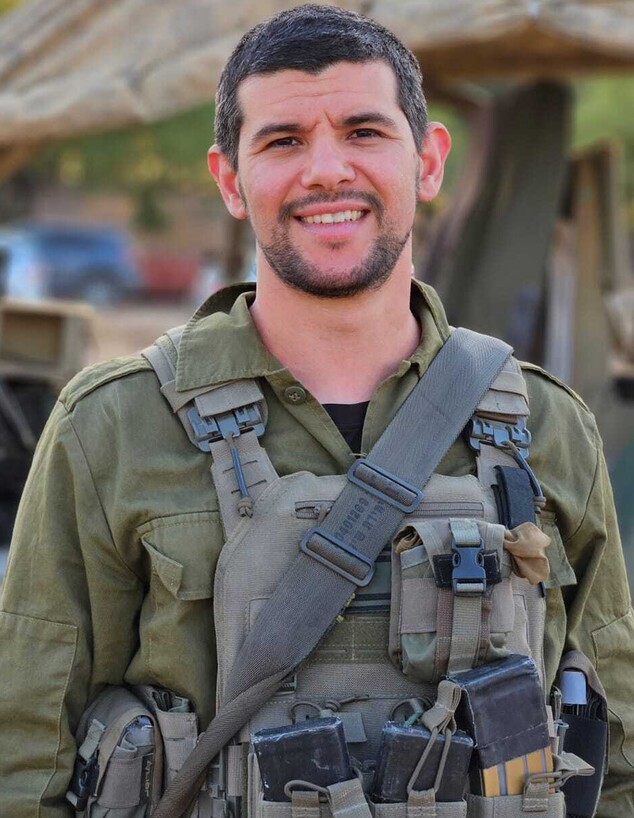
"In many ways, I've experienced PTSD twice," he says. "Once after Operation Cast Lead, and again after October 7. Since then, I've experienced a dramatic worsening of my symptoms. The panic attacks are more frequent—and much more intense."
He carefully describes what life looks like today. "The attacks are harder than they used to be, but now I have many more tools to deal with them. In the past, whenever I had a panic attack, I simply had to wait until it passed because I didn't know what else to do. Years ago, it felt like crushing pressure in my chest. Today it's genuine shortness of breath. I feel like I have to stop whatever I'm doing and sit down, otherwise I might faint. But the difference is that now I know what's happening. I know how to respond."
Barkai says he no longer fears the panic attacks themselves, even though they still occur from time to time.I'm not afraid of them anymore. I stay with them. I embrace them. I know they're part of my life, and there's nothing shameful about that."
פרסומת
"A Tsunami of PTSD"
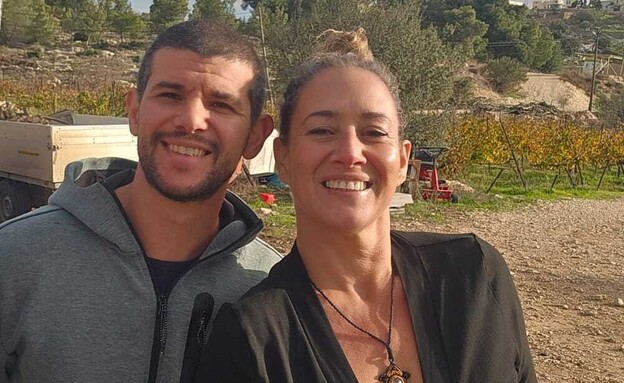
Out of Barkai's personal struggle grew a joint mission with Tasarfati. "I realized we were facing a tsunami of PTSD," he says. "I made the decision to stop everything. I closed my successful businesses and devoted all of my attention to this initiative focused on treating combat soldiers. I believe the time has come to legitimize post-traumatic stress."
"I see myself as proof. People look at me and see someone who is strong, successful, and highly functional. But inside, I've gone through incredibly difficult things. I don't want to be ashamed of that anymore. On the contrary – I want people to understand that this can happen to anyone."
פרסומת
Barkai and Tasarfati's shared mission has since expanded far beyond Israel. Together, they embarked on an international advocacy campaign that culminated this week with an address at the United Nations. "That's exactly why we traveled to the UN," Tasarfati explains.
"We didn't come only to talk about Israel. The entire world is bleeding from trauma. We came to show that we've developed an innovative model for healing and post-traumatic growth, and to tell the world that we've reached a new frontier in trauma treatment."
"We Still Don't Have Enough Resources"
Although awareness of post-traumatic stress has increased dramatically since the outbreak of the war, Barkai says there is still a long way to go. "It's an invisible injury," he explains. "Many people who are suffering don't even realize they've been injured. It's not only that they're ashamed to talk about it—they often don't understand that they're carrying a real wound. It's every bit as real as any physical illness. The difference is that you can't see it."
פרסומת
"My mission is to normalize PTSD—to give it a name and legitimacy. I want people living with post-traumatic stress to be able to say, 'I'm not okay. I need help,' without feeling ashamed." He also has a message for Israel's decision-makers – and for the public. "The country is facing an enormous crisis, and the mental health system simply doesn't have enough capacity," he says. "It's important for people to understand that almost everything Einat and I are doing today receives little to no government funding. This work is made possible through nonprofit organizations, donations, and business initiatives. We want to help the state recognize the scale of this challenge. But until that happens, we need the public to stand with us."
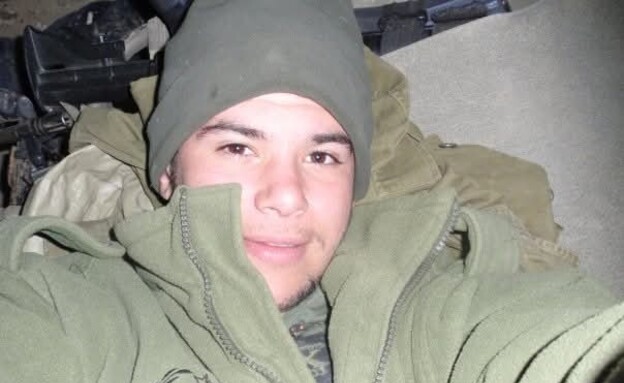
"I'm No Longer Fighting to Survive". That same message echoed from the podium of the United Nations, where Barkai concluded his speech with a personal appeal. "I came here today to represent thousands of soldiers and trauma survivors who are asking for a real chance to reclaim their lives."
פרסומת
"I am living proof that even after the most devastating injuries, it is possible to rise again—not because the past disappears, but because a person discovers that they possess a strength greater than their pain."
"Einat gave me that opportunity. And when I found my way back to life, I realized I had one responsibility: to extend that same hand to others. Today, I'm no longer fighting to survive. I'm fighting so that others can live."
מצאתם טעות לשון?