

Boris Shtonda, critically wounded in an incident where four soldiers were killed in Gaza, had to relearn how to walk, and within a year he climbed Mount Kilimanjaro. "I am the only amputee in the world who has done this", he proudly says. He has now also completed the grueling half Ironman in Valencia. "The body is capable far beyond what people think"
פורסם: | עודכן:
By Ben Goldfriend | N12
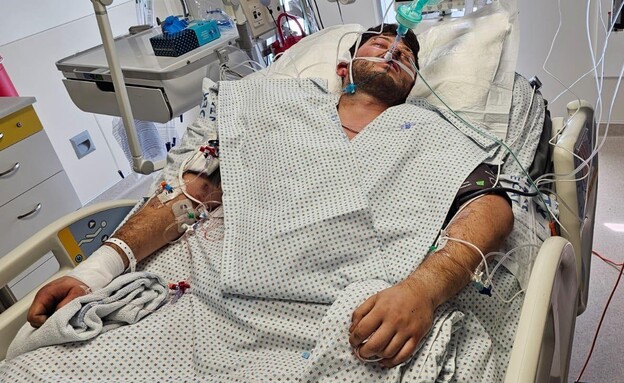
Boris Shtonda was critically wounded during the Iron Swords war (Milchemet Charvot Barzel), in the Beit Hanoun disaster in which four fighters were killed and four others were wounded. "The injury occurred at the entrance to a tunnel in the northern Gaza Strip. A 13-kilogram charge exploded; in that incident four were killed and another four came out with critical injuries, all amputees", he recounts.
Shtonda underwent dozens of surgeries, was sedated and ventilated for 9 days, and his leg was amputated above the knee - but none of this stopped him from achieving accomplishments that are difficult even for able-bodied people. Recently he competed in the Half Ironman competition in Valencia, beating quite a few "regular" athletes along the way. In a special interview, he tells everything about the past few years.
"The ones who pulled us out of the tunnel were guys from the platoon who heard the explosion", Shtonda continues, reconstructing the harrowing event. "They got us out of there and gave us first aid. I received five units of blood, morphine, ketamine, anything to reduce the pain". During a 68-day hospitalization he underwent 19 different surgeries and was sedated and ventilated for nine days.
Were you conscious?
"I woke up from sedation for the first time after five days, and they discovered I had a bloodstream infection, so they sedated me again. You can't understand how it's possible to live like that. You're miserable, dependent on nursing care. They help you shower, you're hooked up to 1,000 tubes. In that terrible pain you only think about dying, you don't understand how it's possible to live with that pain. You have to understand that after the injury they collected me in pieces and then assembled me like Lego. It's hard to think about living like that".
פרסומת
You said four of your team members were killed. Is there a feeling of 'why them and not me'?
"Absolutely. The moment I woke up from sedation I felt something called 'survivor's guilt' - why did I survive and they were killed. Of course the families of the fallen would never say something like that to me. I'm in touch with the families, and we strengthen one another, we talk a lot".
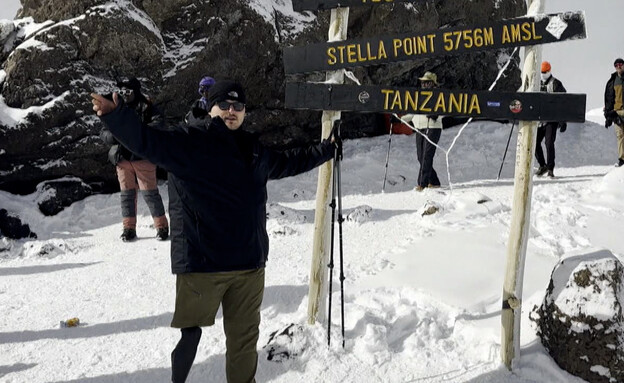
From that far-from-simple situation, Boris found himself, surprisingly, at sports. "From the hospitalization I moved to six months of rehabilitation at Tel HaShomer hospital. I learned to start walking", he recounts. "From there I grew and grew, and I realized I wanted to challenge myself and do extreme sports". He flew to Iceland and did small treks there, and as a result fell in love with the idea of doing the impossible. "I really loved it and I set myself an impossible goal - to climb Kilimanjaro. Since then I've climbed it twice. I'm the only amputee in the world who's done it", he says proudly. "I only got my prosthesis after six months, and 8 months after I got it I climbed for the first time".
פרסומת
"Satisfaction That's Impossible to Describe"
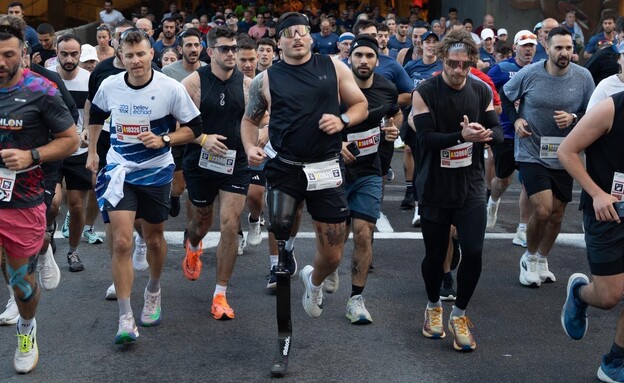
Since he got up from the hospital bed, the critically wounded man "who was assembled like Lego" has racked up enormous achievements: climbed Kilimanjaro twice, participated in half-marathon races in Israel and around the world, and just this past weekend he returned from his latest achievement - the Half Ironman in Valencia. This is a race in which competitors swim 1.9 kilometers, ride 90 km on bicycles, and finish with a half-marathon run.
פרסומת
After the mountain climbs, Boris's next "impossible" goal was to do the Ironman challenge. "I studied the subject; I didn't know how to swim or run, certainly not with a prosthesis. I started from zero, but I really loved it", he says. "I flew to the United States and had a special prosthesis made for cycling and running. Before that I rode my bike with one leg over enormous distances, 100 kilometers sometimes. Now in Valencia I competed against regular people and passed nearly 1,000 of them".
Tell me about the feeling when you finished the competition?
"I felt satisfaction that's impossible to describe. I told myself how much the body and the head are not the same thing. People don't understand how much I fight my own head to move my body. I proved, in my opinion, that the human body is capable of far more than what people think. As a person without a leg, I can say that the difficulty is only in our heads".
From Rehabilitation to the Wedding Canopy
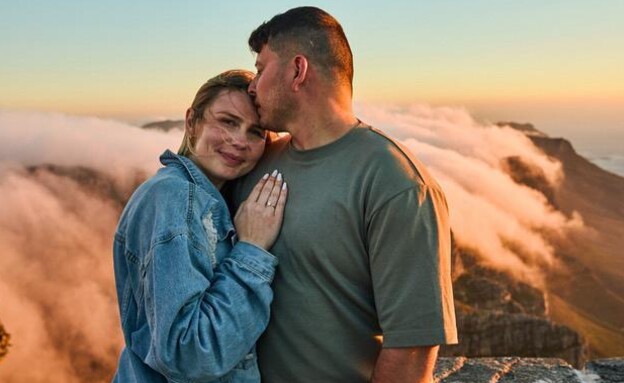
But it turns out that competitions and sports weren't the only things that kept Shtonda busy in recent years. Amid the injury, the fight for his life, the rehabilitation, and then the endless training sessions and competitions - Shtonda also met Anna, now his wife, and within a year and a half of meeting they managed to get engaged and married. "When I made aliyah with my family in 2009 we lived in Ma'alot and she lived there too, and that's how we first met", he recalls of their initial acquaintance.
פרסומת
"We hadn't been in touch since we lived in Ma'alot, but the moment I was wounded she heard about it and decided to come visit me", Shtonda continues. "I think at first it was just friendly, but very quickly the visits became weekly visits and it turned into something romantic".
How did you even think about a romantic relationship in the state you were in?
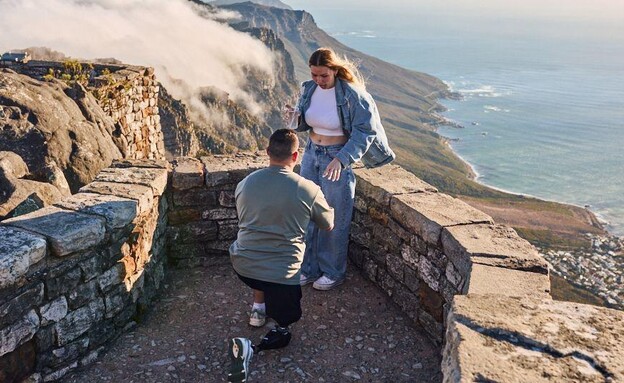
"That's the million-dollar question. Really, how can someone think about something romantic and a relationship and a partnership when he's in a hospital bed fighting for his life? My whole life flashed before my eyes. But with her it felt right. I felt that if there's a girl who's willing to be with me when things are so bad for me, and it doesn't bother her how I look and what's happening around me - then everything's okay. After a year we got engaged, and after a year and a half we got married".
פרסומת
After what happened to you, do you think your kids will go to the army?
"Of course. Being Israeli, in my opinion - part of the identity - is going to the army and fulfilling your civic duties. It's important to contribute. You don't need to be a geopolitical genius, and we see what's happening in the world and how many enemies simply want to destroy us - we have no choice but to be united, and to contribute. We don't have the privilege to sit and do nothing".
Boris feels that the injury created a "different fate" for him, and he's certainly not sure he would trade the injury and that fate to go back to his previous state with two legs. "Obviously I'd want my leg back, but I'm not sure I'd go back in time and ask not to be wounded" he admits. "In the end, thanks to this injury I met my wife and so many positive things happened to me. I learned to believe in myself every morning and that every day is a victory".
פרסומת
What's your next goal?
"This coming October I got a spot in the Ironman World Championship. I'll be competing against the strongest people in the world and this time it will be double the distance - 4 km swimming, 180 km cycling, and to top it all off a full marathon."
מצאתם טעות לשון?