
Legislative Blitz: The Bills Set to Pass in the Final 24 Hours Before the Knesset Dissolves
With one day remaining before the 25th Knesset dissolves, lawmakers are expected to conclude their term by approving bills to weaken the media and extend mandatory military service, after already passing several controversial laws now facing challenges before Israel's High Court of Justice
פורסם:
By Dvir Givre and Daphna Liel
With only 24 hours left before the dissolution of the 25th Knesset, the coalition plans to use today (Thursday) and tomorrow to complete its political deal and give final approval to the remaining bills that were part of its legislative agenda for this term.
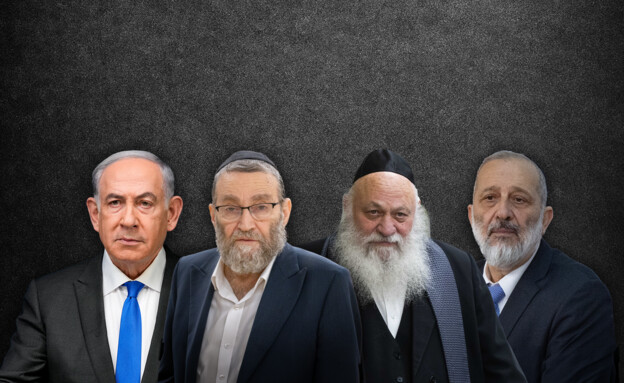
Under the agreement between Prime Minister Benjamin Netanyahu and the ultra-Orthodox parties, the Knesset approved a series of laws demanded by the Haredi factions. In return, the Haredi parties agreed to support legislation sought by Netanyahu.
Basic Law: Torah Study
- The first law passed as part of the agreement was the Basic Law: Torah Study. Israel does not have a single written constitution. Instead, its constitutional framework is based on a series of Basic Laws, which function as the country's constitutional laws and carry special legal status.
- The bill passed by a vote of 63 in favor and 52 against, with Prime Minister Netanyahu absent from the vote.
- The law grants Torah study the status of a "fundamental national value."
- Following its approval, petitions challenging the law were filed with the Israeli High Court of Justice.
Law Freezing the Arrest of Draft Evaders
- The second law approved under the agreement freezes the arrest of military draft evaders.
- The bill passed by a vote of 58 in favor and 54 against, again with Netanyahu absent.
- The law grants immunity from military prosecution to draft evaders.
- Ahead of the vote, lawmakers from the ultra-Orthodox parties were required to disclose any potential impact the legislation could have on members of their own families.
- IDF Chief of Staff Lt. Gen. Eyal Zamir warned against the legislation, saying it "creates an incentive not to report for service and is inconsistent with the values of the IDF."
- Following petitions filed against the law, the High Court suspended its implementation pending judicial review. A hearing before an expanded panel of justices is expected in the coming weeks.
Law Repealing the Previous Government's Kashrut Reform
- The Knesset also approved legislation repealing the previous government's kosher certification reform by a vote of 46 to 41.
- The law eliminates competition in Israel's kosher certification market and restores exclusive authority over kosher certification to the Chief Rabbinate.
- Opposition lawmakers dubbed the legislation the "Jobs Law," arguing it creates political appointments, as kosher supervisors will now be appointed through local religious authorities.
פרסומת
Law Weakening the Attorney General's Powers
- The Knesset approved legislation reducing the powers of the attorney general by a vote of 65 in favor and 51 against.
- Netanyahu was again absent from the vote.
- Under the law, the government may prevent the attorney general from representing it before the High Court and instead appoint an outside attorney to do so.
- The government will also gain authority to determine procedures for appointing and dismissing the attorney general.
- In addition, the attorney general will be placed under the supervision of the justice minister.
- Petitions challenging the law have also been filed with the High Court.
Gender Segregation in Higher Education
- The Knesset approved legislation expanding gender-segregated academic programs by a vote of 52 to 43.
- The stated purpose of the law is to broaden the availability of gender-segregated graduate degree programs at institutions of higher education.
- A petition challenging the legislation has also been filed with the High Court.
Bills the Coalition Still Intends to Pass
Media Reform Bill
- The coalition has yet to pass its media reform bill, but it is expected to receive final approval before the Knesset dissolves.
- The proposal would introduce sweeping changes to Israel's media market, including financial benefits for media owners considered close to the government.
- Among its provisions are government influence over television ratings measurement and advertising budgets, potentially allowing the Government Advertising Agency to direct state advertising funds toward favored television channels.
- The bill would also eliminate restrictions on cross-ownership in the media industry and remove existing limitations on advertising and sponsorships. For example, owners of television broadcast channels would also be permitted to own newspapers.
- In addition, the proposal would abolish the structural separation designed to preserve the independence of news divisions from the commercial interests of media owners. It would also redefine "small channels" in a way that would classify all commercial television channels currently operating in Israel as "small," thereby exempting them from the requirement to establish independent news companies.
- The legislative process leading up to the bill's submission to the Knesset has prompted multiple petitions to the High Court seeking an interim injunction to halt the legislation. While the court declined to intervene before the legislative process concluded, Supreme Court President Isaac Amit indicated that the court could consider issuing an injunction if the bill ultimately becomes law.
פרסומת
Extension of Mandatory Military Service
- Under legislation still awaiting final approval, compulsory military service for IDF soldiers would be extended from 30 months to 32 months, replacing the temporary provision that had shortened service to 30 months.
- The government says the extension is necessary due to a manpower shortage in the IDF and the military's demand to increase the number of active personnel.
- The proposal comes as the government continues to delay legislation that would require ultra-Orthodox men to enlist in the military, while large-scale exemptions from military service remain in place.
מצאתם טעות לשון?