
"The Process Has Already Begun": The Plan That Would Allow Gazans to Move Beyond Hamas' Control
A source involved in the Peace Council's planning tells N12 the initiative is meant to weaken Hamas - not rebuild Gaza - and reveals new details of the plan.
פורסם:
By Tomer Almagor
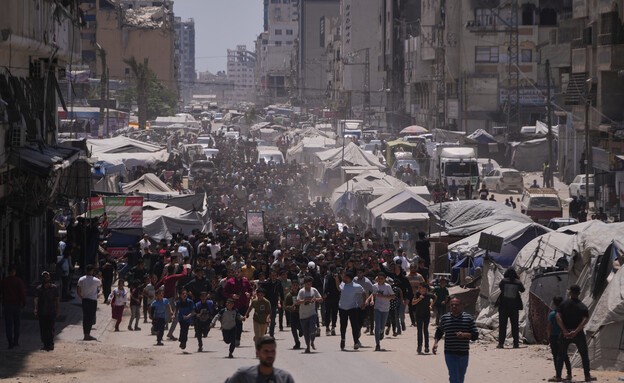
The Peace Council is advancing plans for a pilot project that would allow Palestinians in Gaza to relocate to areas of the Strip outside Hamas' control, according to multiple sources familiar with the discussions who spoke to N12.
While Israel and the Peace Council continue to view Hamas' disarmament as the ultimate objective, they are no longer prepared to wait for the terrorist group to agree. Instead, officials hope that by next winter, parts of Gaza's population will be able to move voluntarily into areas beyond Hamas' authority along the so-called Yellow Line.
For months, mediators and the Peace Council have been negotiating with Hamas over the group's disarmament, but Hamas continues to reject full demilitarization. As negotiations remain stalled, planning for the next phase is already moving forward. "They have no intention of waiting for Hamas," a source closely involved in the Peace Council's planning told N12.
"If Hamas refuses to disarm and allow the committee to enter Gaza, the pilot projects will move ahead regardless. They'll begin in designated areas where a new governing framework can take root and gradually expand from there. One way or another, this is going to happen – they're not letting Hamas dictate the timetable." The initiative effectively represents the implementation of Article 17 of U.S. President Donald Trump's peace plan.
Although officials stress that no formal launch date has been set, another source familiar with the discussions confirmed that the project is awaiting final Israeli approvals alongside internal preparations within the Peace Council.
פרסומת
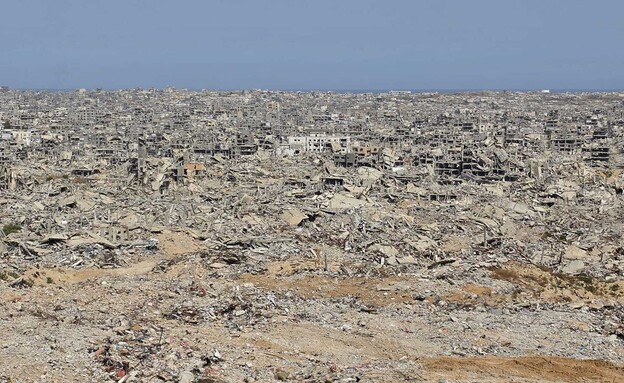
Despite the lack of an official timeline, work on the ground is already underway. According to sources, construction has begun on a base in southern Gaza that will house the first 500 to 1,000 members of the International Stabilization Force (ISF). At the same time, engineering work is underway around the planned Emirati neighborhood in southern Gaza. The project is expected to take several months to complete and includes complex tasks such as clearing unexploded ordnance and preparing the terrain for construction.
Another source familiar with the plans told N12 that the IDF is actively clearing the area designated for the pilot, while plans for the Emirati neighborhood have already been finalized. Officials hope that by next winter, "a significant portion of Gaza's population, if they choose, will be able to seek shelter outside Hamas' control." The source added that the project is financed not by Israel but by the United States, Gulf states, and several additional countries.
פרסומת
Officials insist the initiative should not be viewed as the beginning of Gaza's reconstruction or as the creation of a "new Rafah." Instead, the pilot would provide temporary but improved living conditions, including caravans, higher-quality tents than those currently available in Gaza, and basic electricity and water infrastructure.
According to the sources, Rafah is expected to serve as the first pilot site, with several additional locations identified elsewhere in Gaza along the Yellow Line, well away from both Israel's border and Israeli population centers.
Israel maintains that Gaza's reconstruction cannot begin until Hamas has been fully disarmed, in line with President Trump's peace plan that brought the war to an end. For that reason, officials emphasize that the pilot is not considered reconstruction. Rather, it is intended to give civilians the option of leaving Hamas-controlled areas, thereby weakening the organization's grip on Gaza's population while improving humanitarian conditions.
"Israel is being extremely cautious throughout this process," the source said. "Sometimes it even needs encouragement to move faster. But Israeli officials also recognize that if Hamas is to be weakened, the next step is reducing its control over the civilian population." According to the source, the International Stabilization Force will be essential to the pilot's success.
פרסומת
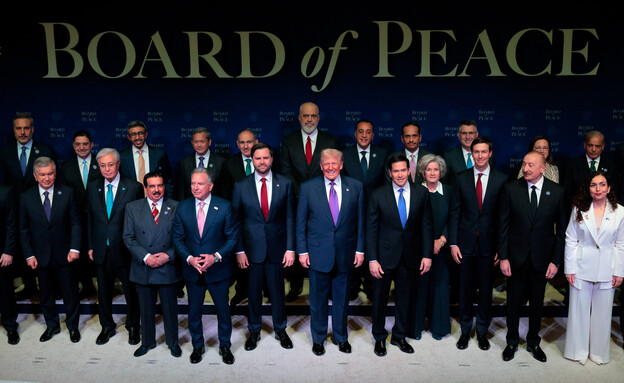
The goal is to avoid direct interaction between the IDF and Gaza's civilian population. Instead, local security personnel, supported by the ISF, would be responsible for maintaining order. These local forces would not carry firearms but would operate with ISF assistance. A separate screening mechanism would ensure that armed militants do not enter areas outside Hamas' control. Importantly, those inspections would not be conducted by the IDF. This isn't about creating closed zones or detention camps," the source said. "Anyone who is not armed or involved in military activity will be free to enter and leave as they wish." Morocco, Albania, Kosovo, Indonesia and Kazakhstan have already officially committed forces to the stabilization mission, which will operate under U.S. military supervision.
Last week, N12 reported that talks are also underway with Vietnam, Uganda and Georgia, while additional countries remain under consideration. Even so, deploying the force inside Gaza is expected to be a lengthy and complicated process requiring extensive coordination and training.
פרסומת
On Monday, Hamas announced that its Government Emergency Committee would be dissolved, with its chairman resigning ahead of transferring Gaza's civilian administration to the Technocrats Committee. The announcement, however, was met with skepticism in both Israel and the Peace Council.
Foreign Minister Gideon Sa'ar argued that Hamas is attempting to create "the Hezbollah model" in Gaza. Writing on X, Sa'ar said Hamas' willingness to hand over civilian governance was designed to avoid disarmament.
"The technocratic committee would deal with garbage collection and municipal services," he wrote, "while Hamas would remain the dominant military force. As long as Hamas retains its weapons, the civilian administration will inevitably operate under its dictates." He added that Israel remains committed to implementing President Trump's peace plan in full, with Hamas and all other terrorist organizations disarmed and Gaza completely demilitarized.
פרסומת
The Peace Council also responded cautiously, saying its assessment would be "based on actions, not promises." It reiterated that its guiding principle remains "one authority, one law, one weapon," meaning all arms in Gaza must ultimately come under the authority of the Technocrats Committee.
A Peace Council official told N12 that negotiations with Hamas are continuing but stressed there will be no compromise on the issue of disarmament.
"When we talk about disarmament, we mean full authority for the Technocrats Committee over every aspect of security in Gaza – including small arms, heavy weapons and the tunnel network," the official said. No organization other than the Technocrats Committee should possess weapons in Gaza. We are not prepared to settle for anything less. The process can be gradual and respectful, and it should benefit all of Gaza's residents, but it cannot be partial. The mediators share this position."
Ali Shaath, head of the Technocrats Committee, echoed that position in a public statement, saying his committee would only enter Gaza "once the essential conditions for its work have been met." According to Shaat, those conditions include the establishment of "a unified security framework" – a clear indication that the committee will not assume responsibility for governing Gaza until Hamas has fully relinquished its weapons, despite the apparent governing vacuum left by the group's announcement.
מצאתם טעות לשון?