

They are raising children in foreign languages and grown used to the stability of life abroad, but the elections of October 2026 have shaken them out of their indifference. Despite soaring flight prices and criticism regarding "remote-control voting," thousands of Israelis in the diaspora have already reserved their place on the way to Ben Gurion Airport
פורסם:
By Or Samia
"These are the most important elections there have ever been here," was a sentence repeated in almost every conversation. This urgency, which until now echoed mainly in distant living room chats, is translating this year into action: a plane ticket and a ballot slip. Many Israelis who in the past would never have considered making the long journey just for one day now find themselves part of widespread mobilization waves.
"We took down the mezuzahs and didn't put them back - this must change"
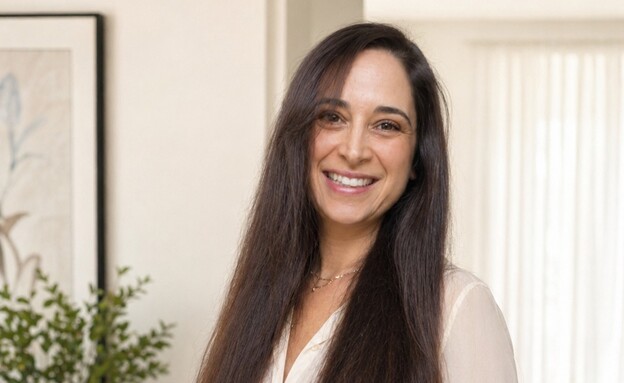
For Moran Pedi, who has lived in the Netherlands for the past three years after a decade in the United States, the decision to come and vote is linked to a sense of commitment to the country but also directly to her personal security abroad. Since October 7, she and her family have been living under a cloud of fear.
"I never hid my identity, but since that Saturday, we have been keeping a low profile," Moran says. "We took the mezuzahs off the doors and haven't put them back." She describes an incident at Primark where a cashier asked about their origin. "I told her we were from Arizona, but then my son contradicted me and said 'We are from Israel'. The line was full of Arabs who looked and started approaching us; I got down to my son's eye level and told him: 'Please be quiet, don't say the name of the country.' It’s hard to explain that feeling to someone who hasn't experienced it".
Moran feels that the government's policy affects her directly, even when she is abroad. "It’s 2026 I am afraid to say where I am from, that must change. My husband and I agreed between us that no matter when the elections take place – I am on a plane. We decided we would take a vacation in Israel; the children and he will return to the Netherlands for school, and I will stay in Israel to vote".
פרסומת
"Israel is surrounded by madmen - we must not forget that"
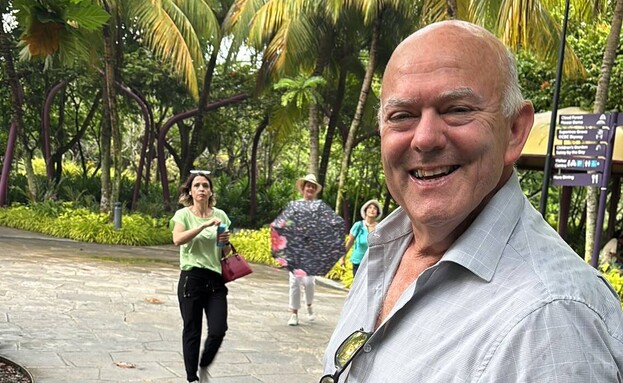
The story of Tamir Ben-Yosef, who lives in Kent, England, is different. Tamir’s life abroad began four decades ago when he departed Israel at age 24. "I have never in my life voted in Israeli elections," he shares. "This will be the first time".
Tamir's roots are planted deep in Israel's security. His father was the well-known commander of Shayetet 13, Aharon (Eskimo) Ben-Yosef, and following him, the family moved to Australia for a few years when Tamir was a child. When they returned, he himself enlisted in the Shayetet, serving in the same unit as his father, and after finishing his studies at the Technion, he went on a trip – and has not lived in Israel since.
פרסומת
"I am very sad," says Tamir. "I am not leaning left nor right; I am center. I am in favor of democracy; it’s important to me that the country remains democratic and can also defend itself in the middle of the mess of the Middle East. It's a terrible shame that it’s being ruined". The turning point for him occurred on October 7 and the discourse surrounding the Draft Law. "I realized that help is needed. As soon as I heard the date—I booked a ticket".
Tamir will arrive to vote alone: "My wife doesn't want to come; she is concerned about the security situation here". However, Tamir does not hide his love for the State of Israel and the importance he sees in contributing to the country. "This country is important to us; the reason I left at the time was that it was very difficult in Israel—but I want the country to survive. If I don't vote, it won't affect my life here in England; my life is good here, but I worry about the future – Israel is surrounded by madmen and we must not forget it".
פרסומת
"A Prime Minister who wasn't afraid to deal with Iran - should stay"
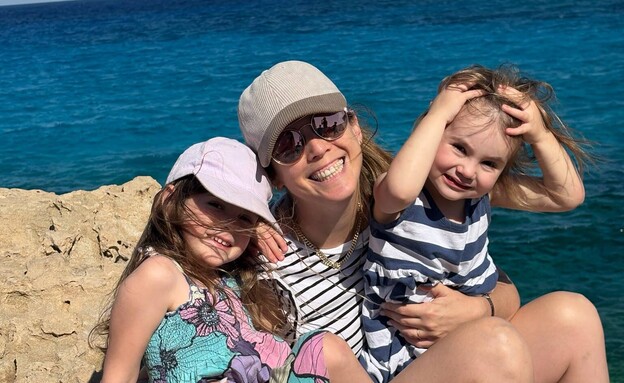
"I assume not everyone will agree with me," says Lee, who lives with her husband and three daughters in Los Angeles and is also expected to come to vote in the elections. "I look at everything through a distant prism, from the outside. The Israeli government went through the most difficult event our people have had and remained strong and united and did not collapse under the pressure". According to her, the political echelon set clear security goals for itself and met almost all of them.
Lee described the sense of pride she felt during the attack on Iran: "What Prime Minister would be so unafraid to deal with Iran?" she asked. "And in such coordination with the United States; I can't explain the pride we felt here in both Netanyahu and Trump. I think people don't understand how big this thing is – for these actions alone, he must stay, simply must".
The motivation to come to Israel also stems, according to her, from the aspect of Jewish character. "The thought that tomorrow morning we will wake up to a government that sits with Arabs after the disaster that happened to us can cause any person to book a ticket and come to Israel to vote," she explained. "I booked a ticket two days after there was a date – it cost me accordingly, but I understand the importance".
פרסומת
The manager of Israel's largest community - and the unusual step
Tair Mordoch represents a broader perspective. She manages the "Women in a World of Opportunities" community, the largest relocation women's community in Israel, numbering about 82,000 women from 84 countries. Tair, who returned to Israel seven years ago after a long stay in Tokyo and Singapore, participated in Master Chef and has 114,000 followers on Instagram; she sees her community as a barometer for the state of the country.
"This community is a mirror of what is happening in Israel," explains Tair. "Every time there is a crisis here, I see it immediately in the volume of entry and growth of the community. Talented and good people are fleeing from here. I always say cynically that as long as it's bad in Israel, it's 'good' for my community, but that's not the case. Those same people who leave are the ones who can afford to be anywhere – and those are exactly the people we want to stay in Israel".
In an unusual step for her, Tair decided to use her influence to motivate the women of the community to come to Israel to vote. "For eight years I have been managing this community and I have never asked for anything. This time I asked: come and vote. This post reached thousands of views and comments from women who said 'we are coming'".
פרסומת
Her argument is simple: "What happens in Israel also affects Israelis in the world. Your children may return here for the army or service, and if something happens in the world – this is the only place you can escape to. 80,000 women with partners is a massive electoral force. Why not use it?".

"The heart remains in Israel"
"Being far from Israel on October 7 was an inconceivable difficulty," says Merav Ronen, who has lived in Kent, England, for the past four years. Despite the European quiet, her heart remains in Israel, and since October 7, she consumes news from Israel incessantly.
פרסומת
"The feeling is that this time it is more urgent and important than ever," she shares. "We took time off work, the girls will miss school – but it is truly important to me". The discourse about coming to vote has recently surfaced in every group she belongs to where there are Israelis in relocation: "It is at the heart of the discourse, it's everywhere, and people share that they are coming specifically – and so are we".
Criticism that she does not live in the country but influences its fate is not foreign to her. "I understand that statement, but I am an Israeli citizen. I still feel like a part of it and the country is important to me". She adds that the arrival and the election results may influence their return: "I don't feel that I have finished the Israeli chapter of my life. My daughters say 'when we grow up we will live in Israel,' and I want that to be a real option for them".
פרסומת
"Fateful elections, perhaps the last"
"On the day the dates were published, it ran through all the Israeli WhatsApp groups. I bought a ticket that same day," says Shirley Dan-Ari, who has lived in Porto, Portugal, for the past two years. "Two days later, the price had already jumped". Shirley, who grew up abroad during various periods, has never flown to Israel specifically to vote, until now.
"It's hard to see what's happening in Israel; in our community, we care deeply about what's happening in Israel, we talk about it constantly. There was tension in the air to understand when the elections would be. One must remember that flying to Israel is expensive, but the feeling that coming is critical this time did its part".
"There is a feeling of fateful elections. Perhaps if we don't succeed in changing things now, we won't be able to save anything anymore. It is clear to us that we can only live abroad if we have the State of Israel". For her, the results will determine if she ever returns. "If there is no change, I will not consider returning. If there is a change – maybe not tomorrow morning, but I am raising my children first and foremost as Israelis".
פרסומת
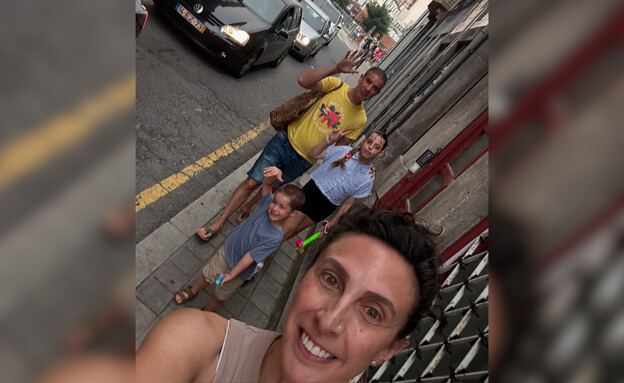
Sagi and the dream of returning to Israel - versus the dream of sustaining a family
Unlike the others, Sagi from Lithuania describes the upcoming elections for him not as a civic duty, but as an existential question regarding his family's future. "If nothing changes now, my story with Israel is probably over forever". Although he moved his life to Cyprus and later to Vilnius four years ago, on October 7, he and his wife, who is not Israeli, happened to be in Israel – and experienced the outbreak of the war firsthand.
Later, on another visit to Israel, this time with their one-year-old son, they experienced the war under the threat of missiles from Yemen. "My wife is not familiar with these things; since what we experienced, she is not willing to move to Israel – and I understand her. I am connected to and love the country, and if I want to have the option in the future – something must change in the elections".
פרסומת
In the face of criticism voiced towards Israelis living abroad who choose to vote, Sagi has a clear answer. "It’s like saying that the Jews who were exiled by the Romans and Babylonians and returned to the land could not have an influence," he argues. "For me, 'by the rivers of Babylon, there I sat and wept as I remembered Zion'. I cry that I am not in Israel; I feel exiled from the land against my will".
"I booked a ticket and I am even thinking of volunteering and helping on election day. it’s not fun in the diaspora, I don't really enjoy it, I want to ensure my children a better future in Israel," he concludes. "If it's not in my hands, then whose hands is it in?".
Half of those registered to arrive via private initiative - from the USA
According to the official voter registry, between 540,000 and 570,000 citizens eligible to vote in Israel do not live there. This represents at least 13 mandates, according to estimates. According to Israeli law, although they are registered as eligible voters, they cannot vote without arriving in Israel, except for a few thousand who are exempt as officeholders, state employees, or emissaries.
פרסומת
Following these figures, the Fly&Vote initiative was born, designed to assist those eligible voters in reaching Israel to vote in the upcoming elections. Sources in the organization told N12 that 30,000 eligible voters have already registered, and they are now assisting them in purchasing organized flight tickets at reasonable prices from a variety of destinations around the world.
Those same sources added that according to the data at this stage, 50% of all registrants in the initiative wish to come from the USA, 10% from the Netherlands, 6% from Switzerland, 4% from the UK, 4% from Canada, 4% from France, 2% from Australia, 2% from Portugal, 2% from Thailand, and 2% from Germany.
מצאתם טעות לשון?