
The New Arms Race Has Already Begun: The Missile Threatening the American Patriot - at One-Fifth the Cost
About $4 million per interceptor, dwindling stockpiles, and production lines struggling to keep pace. After the war with Iran exposed a global shortage of missile interceptors, the United States, Ukraine, and Europe are developing a new generation of ballistic missile interceptors that are cheaper and faster to produce
פורסם:
By Eitam Almadon
The shortage of ballistic missile interceptors, brought into sharp focus by the war with Iran and the ongoing conflict in Ukraine, has ignited a new arms race: who can develop and mass-produce a ballistic missile defense system that delivers performance comparable to the Patriot – but at a significantly lower cost and with much higher production rates.
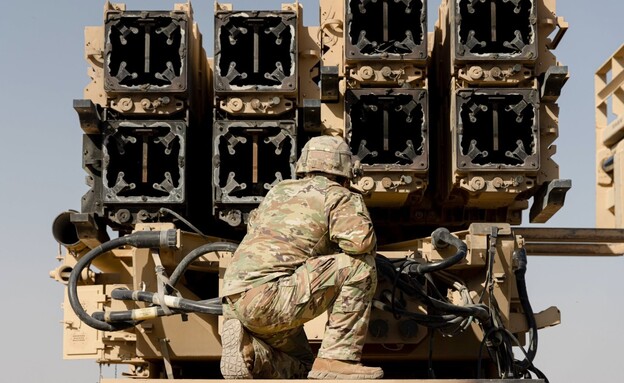
For decades, Lockheed Martin's advanced PAC-3 MSE Patriot interceptor has been regarded as the Western standard for ballistic missile defense. However, the astronomical cost of each interceptor, approximately $3.9 million, combined with lengthy production times has made it an increasingly scarce resource amid large-scale missile and drone attacks in the Middle East and Ukraine, pushing air defense systems to their limits.
"Production Is Slower Than Wartime Consumption"
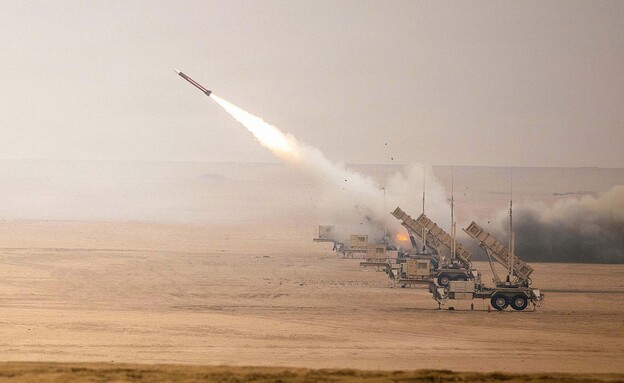
According to an analysis by the Center for Strategic and International Studies (CSIS), during the campaign against Iran, U.S. forces launched between 1,060 and 1,430 Patriot interceptors, at a total cost of billions of dollars. Estimates suggest that roughly two-thirds of America's pre-war Patriot stockpile has already been expended, and it may take years to replenish.
Washington is not the only country desperate for interceptors. Ukraine is also facing a severe shortage of Patriot missiles. The Patriot remains the only Western system that has repeatedly demonstrated the ability to intercept Russian ballistic missiles, including Iskander missiles, modified S-300 missiles, and even Kinzhal hypersonic missiles.
פרסומת
According to Brig. Gen. (Res.) Zvika Haimovich, former Israel Air Defense Forces Commander, the problem extends far beyond Patriot. "Whether it's Patriot, THAAD, SM-3, or Arrow, modern warfare is consuming interceptors faster than industry can produce them," he says. "Every country needs to ask itself whether its planning assumptions were correct and what interceptor inventory it should have prepared. Neither the United States nor Israel built forces sized for the scale of the missile threat we've faced over the past three years."
The United States Expands Production – While Seeking to Cut Costs
In response to surging demand, the Pentagon announced last week an expansion of its production contract with Lockheed Martin, bringing its total value to up to $58.6 billion. The objective is to triple PAC-3 interceptor production by the end of the decade.
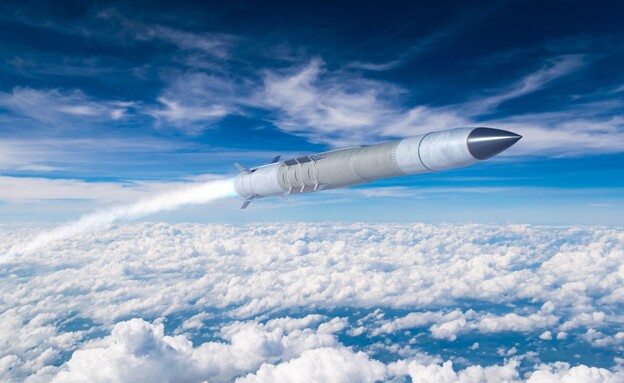
Alongside expanding Patriot production, the U.S. is also working to reduce costs. At the Farnborough International Airshow, Lockheed Martin unveiled the PAC-3 ACE, a new interceptor expected to cost less than half the price of the PAC-3 MSE – roughly $2 million per missile.
פרסומת
The new interceptor is designed to engage cruise missiles, drones, and short-range ballistic missiles, while remaining fully compatible with existing Patriot batteries without requiring infrastructure modifications. According to the company's optimistic projections, production is expected to begin in 2028.
Ukraine Develops a "Low-Cost Patriot"
The severe shortage has prompted Ukraine and nine European countries to launch a new ballistic missile defense system this month called Freyja, intended as a more affordable alternative to Patriot.
פרסומת
The system includes a radar, launchers, a command-and-control network, and a new interceptor designated FP-7.X, developed by a Ukrainian company.
Unlike the traditional Patriot interceptor, which uses a hit-to-kill approach by striking its target directly, the Ukrainian interceptor employs a fragmentation warhead designed to destroy incoming missiles through a nearby explosion.
Its target price is approximately $700,000 per interceptor – just one-fifth the cost of a Patriot missile.
The developers estimate they could produce three interceptors per day as early as August. Kyiv aims to field an operational prototype during the first half of 2027 and conduct its first successful ballistic missile interception by the end of that year.

פרסומת
Trump Opens the Door to Patriot Production in Kyiv
Another recently emerging path is the licensed production of Patriot interceptors in Ukraine.
At the NATO summit in Ankara, U.S. President Donald Trump announced that Washington would allow Kyiv to manufacture Patriot interceptors under U.S. license for the first time. If implemented, Ukraine would become only the second country after Japan to produce Patriot interceptors under an American license.
According to reports, the plan would likely involve assembling interceptors from components imported from the United States rather than full-scale domestic manufacturing. Poland has also offered to host the production lines on its territory for security reasons.
Despite this initiative, the cost per interceptor is expected to remain largely unchanged at approximately $4 million each, and analysts estimate it will take at least 18 months to two years before the first production line becomes operational.
פרסומת
The goal is no longer simply to intercept ballistic missiles, but to do so at a price that allows countries to maintain large inventories and replenish them quickly.
Until recently, Patriot had virtually no Western competitors. Today, however, the competition has shifted beyond performance alone. The new race is to determine who can manufacture large numbers of interceptors at lower cost and at a pace that matches the demands of the prolonged wars of attrition likely to define the coming years.
מצאתם טעות לשון?